Cave Highlights & Geological Features
Green Grotto Caves is a living limestone landscape beneath Jamaica’s north coast, where water has worked slowly through rock and left behind chambers, hanging formations and passages that feel markedly different from the sunshine outside. The cave system in Discovery Bay, St. Ann, is about 1,525 metres long and reaches roughly 12 metres in depth, with interconnected chambers and passageways centred around a large limestone cave and an underground lake. The Jamaica National Heritage Trust describes stalactites, stalagmites and the crystal-clear lake among its principal natural features. citeturn0search36
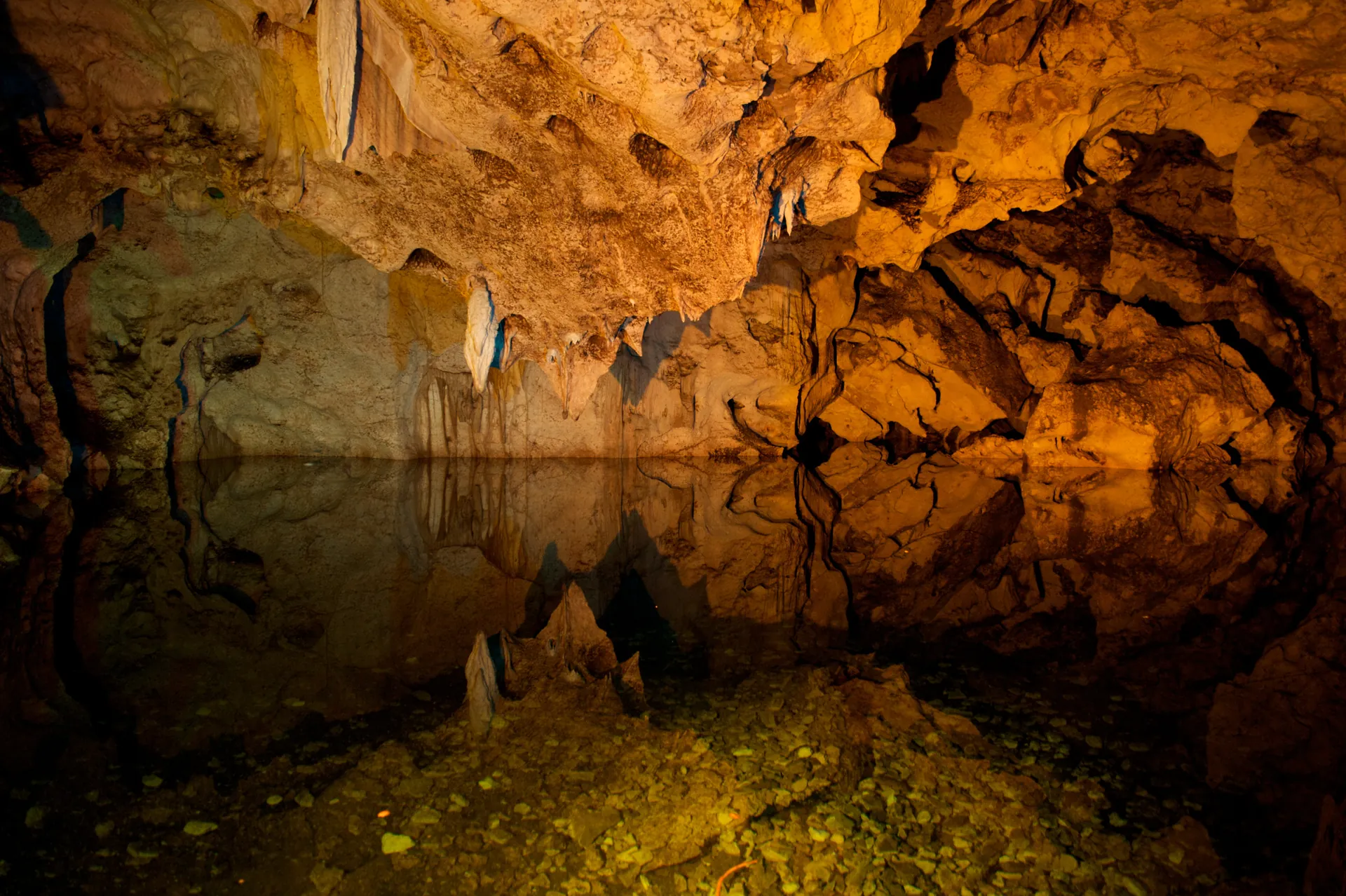
A guided walk changes the way you read the place. Sunlight disappears, voices begin to travel strangely, and the temperature feels cooler against skin still warm from the North Coast road. Artificial lights pick out selected sections of the limestone rather than flooding every corner, so formations emerge from the darkness in pieces. Before you set off, it is worth reading the site’s Visitor Rules & Guidelines, then using History, Heritage & James Bond Legacy for the human stories attached to the chambers. Practical arrival information sits in How to get to Green Grotto Caves.
The things to do at Green Grotto Caves are concentrated underground, but the experience has several distinct layers: limestone architecture shaped by water, the deeper spaces around Grotto Lake, and the wildlife that has adapted to a dark environment. The cave is also part of Jamaica’s wider karst story. The Jamaica National Heritage Trust says that roughly two thirds of the island is covered by cave-riddled limestone, with more than 1,000 known caves.
Limestone Formations & Cave Architecture
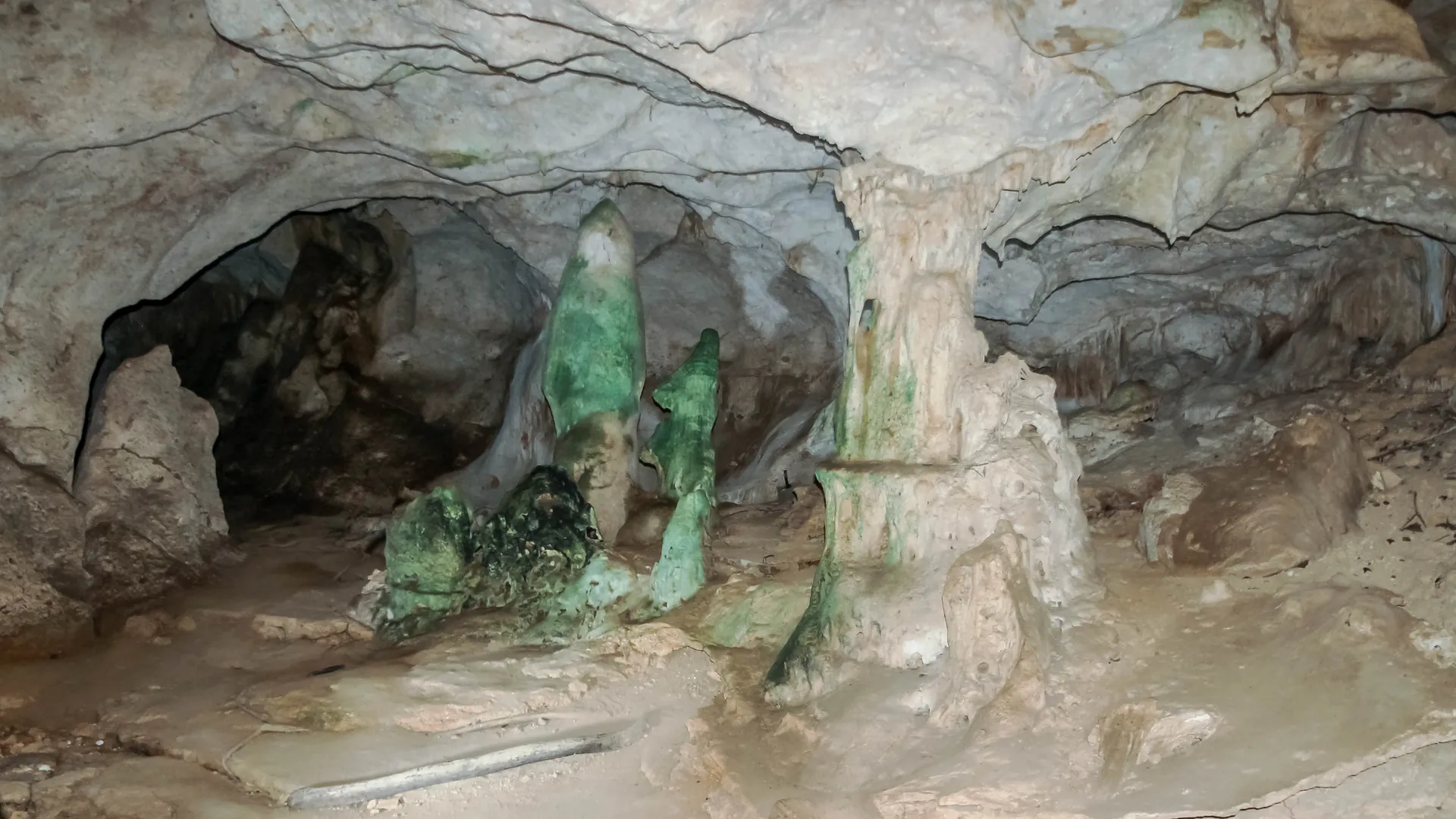
The cave’s limestone surfaces carry the evidence of water in their shapes. Stalactites descend from the ceiling while stalagmites rise from the floor, formed as mineral-rich water repeatedly enters the cave and deposits calcite. Some formations are delicate and narrow; others have grown into heavier shapes that seem almost architectural when a lamp catches their edges.
The route moves through chambers and constricted passages, and the scale changes often enough to keep your attention on the rock rather than on your watch. Green algae on sections of the walls help explain the cave’s name, while damp mineral surfaces catch small amounts of light and give the limestone a sheen that can disappear entirely when the lamps fall away. Jamaica’s official tourism service also describes the caves in terms of ancient limestone, stalactites, stalagmites and underground pools.
- Watch the ceiling as well as the floor, since many of the most distinctive formations hang above the walking route.
- Expect artificial lighting to reveal selected formations while other areas remain genuinely dark.
- Keep your hands off limestone surfaces, since oils and repeated contact can damage fragile mineral growth.
- Give your footwear some thought: damp rock and uneven ground are a poor match for smooth fashion soles.
Photography can be surprisingly demanding underground. A phone may brighten a dark chamber on its screen while producing a photograph that looks nothing like what your eyes saw. The lamps also create strong contrasts between illuminated rock and blackness, so the best Green Grotto Caves photos tend to come from taking your time rather than firing off dozens of shots while the group is moving.
There is a good reason to resist the temptation to touch a formation for a better photograph. Cave growth is slow, and the surface you put a hand against may have taken years or far longer to develop. A guided cave is still a functioning natural environment, not a geological museum whose exhibits can be handled.
Grotto Lake, Depth & Acoustics
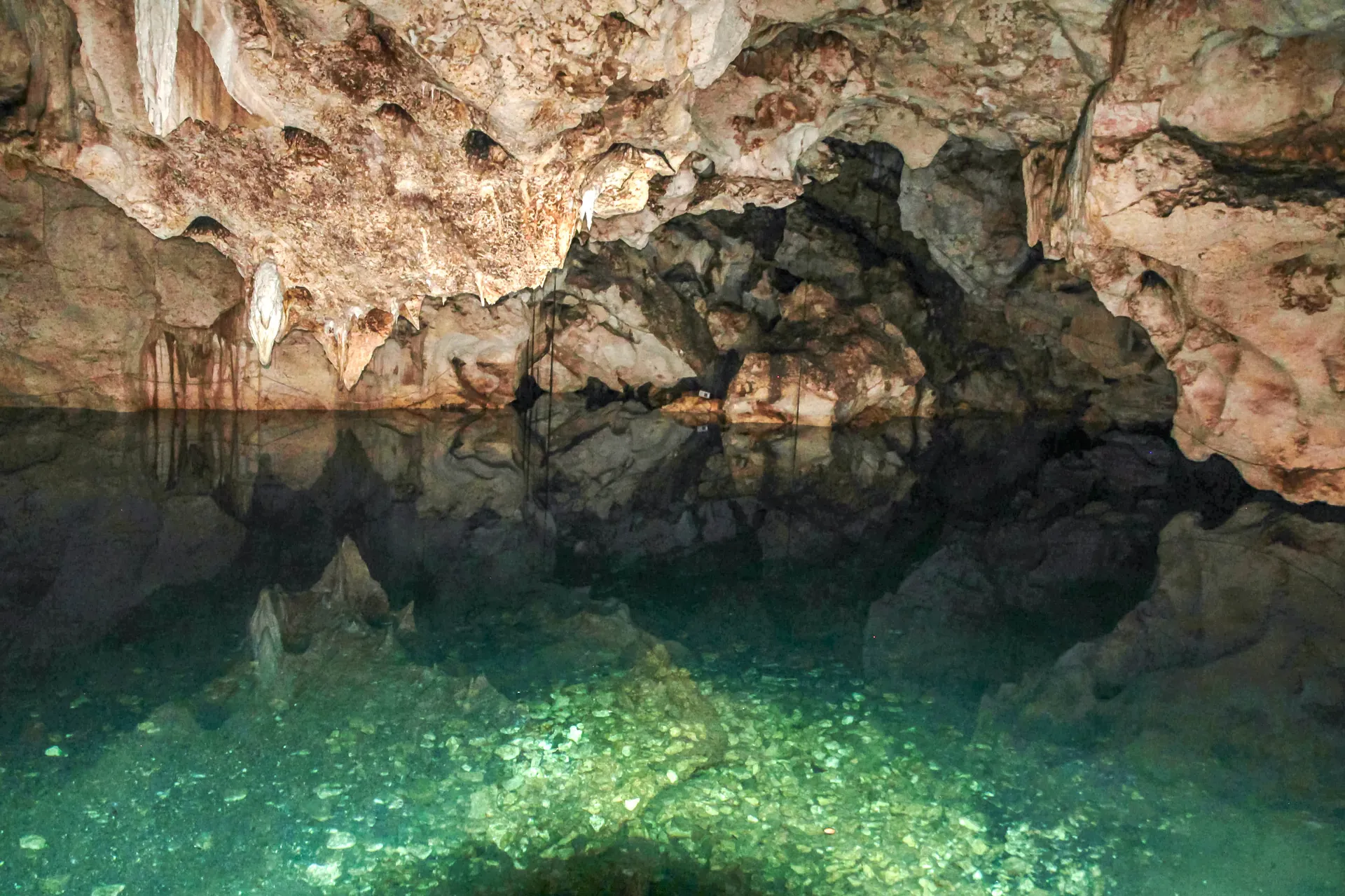
Deep inside the cave, Grotto Lake changes the mood again. The Jamaica National Heritage Trust records a crystal-clear underground lake among the principal features of Green Grotto, while Jamaica’s tourism authority describes the innermost cavern as containing a subterranean lake.
Water in a confined limestone chamber does something to your sense of distance. A guide speaking from farther along the route can sound oddly close, while a footstep may linger against the walls after the person who made it has already moved on. Conversation becomes softer almost by instinct, partly because the acoustics make every sound seem larger than it ought to be.
Inside the cave, voices carry differently, footsteps become part of the soundtrack, and a guide’s explanation can seem to arrive from somewhere beyond the next bend.
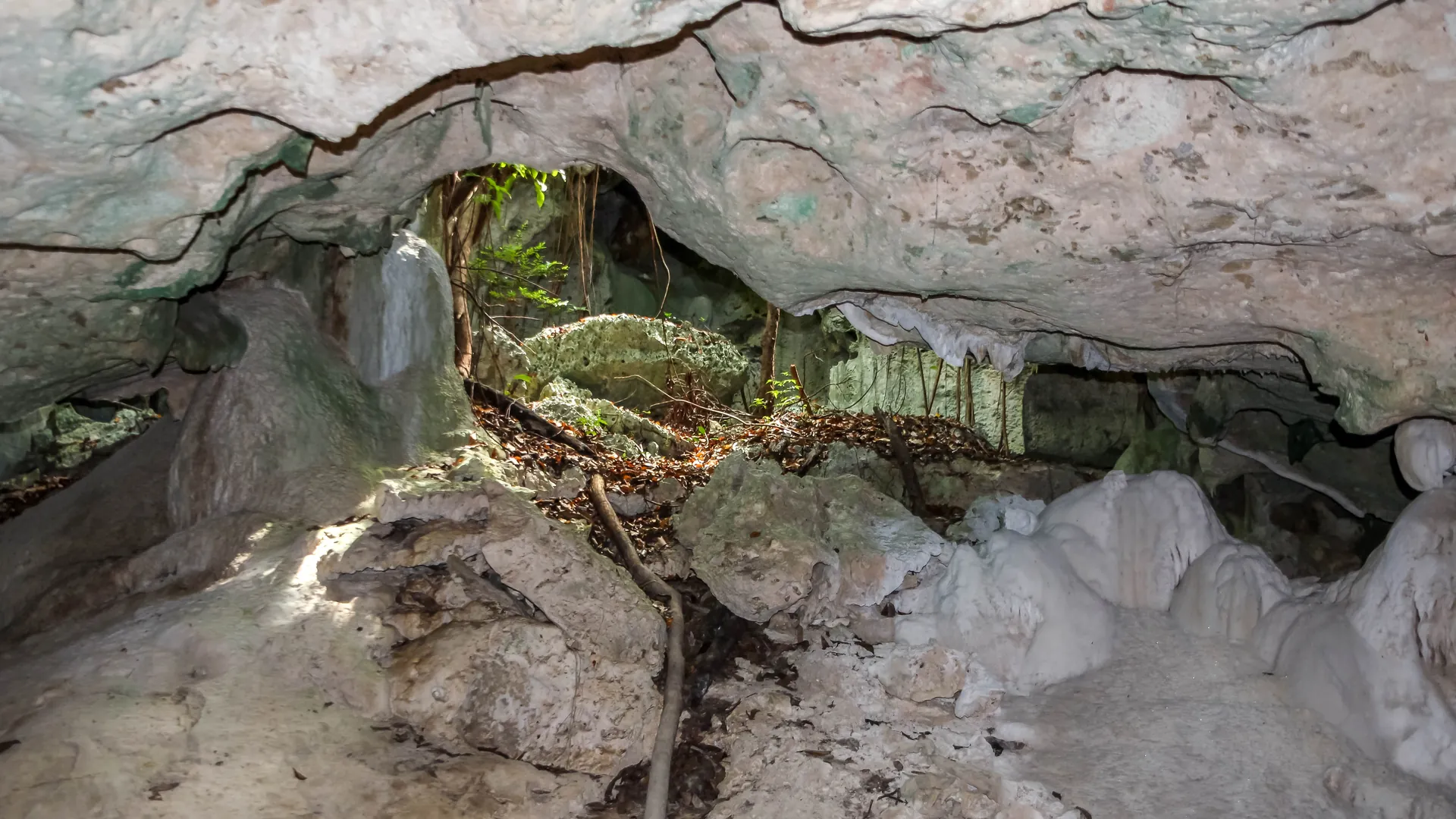
The underground microclimate is part of the attraction. Humidity clings to the rock, water keeps some surfaces slick, and the air feels different from the hot coastal conditions above ground. That contrast is one reason a cave walk can feel surprisingly refreshing after a morning on the North Coast, although anyone wearing trainers with worn soles may discover rather quickly that their footwear has become the least impressive part of the expedition.
The lake also helps explain why the caves deserve restraint from visitors. Water moves through limestone landscapes and connects underground spaces to the wider environment, carrying minerals and organic material along paths that are invisible from the surface. Green Grotto is a developed visitor attraction, yet its underground conditions still depend on natural processes that are easily disturbed.
Darkness, Depth & the Guided Walk
Walking through Green Grotto is less like entering a single cavern and more like following a changing sequence of spaces. The route passes between broader chambers and narrower sections, with the cave ceiling sometimes seeming close enough to touch and then opening above you. The darkness makes these shifts more pronounced because your eyes lose the familiar visual cues that normally tell you how large a room is.
Guides are important here because the rock itself cannot explain what you are seeing. They connect the geological features with the cave’s history and point out details that are easy to miss when you are concentrating on your footing. The official Jamaica tourism service describes Green Grotto as a guided cave experience with geological and historical interest, while its current attraction listings identify the site at Discovery Bay on the north coast.
- Expect natural darkness between illuminated sections of the route.
- Pay attention to the ceiling, walls and floor rather than focusing only on the largest chamber.
- Allow the guide to control the pace around narrow or sensitive areas.
- Keep voices at a sensible level so the group can hear explanations and wildlife is not unnecessarily disturbed.
- Watch your footing whenever the rock becomes damp or uneven.
The James Bond connection belongs to a different layer of the story. Green Grotto was used during filming of the 1973 film Live and Let Die, and the Jamaica National Heritage Trust records the cave’s long sequence of human uses, including occupation by Taíno people, use as a hiding place by enslaved Africans and Spanish settlers, and later storage by the Jamaican government.
That history matters when you are standing underground because the chambers have never been empty scenery. People have used caves for shelter, ritual activity, concealment and storage across Jamaica, and the National Heritage Trust records caves elsewhere on the island as important places in Taíno history and in the history of resistance to enslavement. cite
Bats & Cave Conservation
Bats are part of the underground ecology, and sightings can be fleeting. Some species use caves as roosting places rather than spending their entire lives underground, leaving to feed before returning to shelter. The Natural History Museum explains that caves have stable conditions that make them important habitats for bats and other animals adapted to darkness, while food entering from outside supports much of the underground food web. citeturn0search2
That makes the quiet behaviour expected from visitors more than a matter of good manners. Sudden noise, bright lights or attempts to approach wildlife can disturb animals that depend on darkness and predictable conditions. If a guide asks the group to move quietly or keep lights pointed away from a particular area, there is a sound ecological reason for it.
- Give bats space and leave roosting animals undisturbed.
- Keep hands away from cave walls and mineral formations.
- Stay with the guided route rather than wandering into restricted spaces.
- Follow instructions about photography, lighting and wildlife encounters.
- Leave food, rubbish and other unnecessary objects outside the cave environment.
Conservation underground can be easy to overlook because there is so little visible infrastructure compared with a conventional attraction. The absence of bright lighting everywhere, controlled access to sections of the cave and restrictions around wildlife are part of keeping the environment usable without treating it as an indoor theme park. Caves recover slowly from some forms of disturbance, particularly where mineral deposits or specialised wildlife are involved.
The best cave visit leaves the formations exactly where you found them, with the bats largely unaware you were there.
Traveler Advice for the Guided Walk
- Wear shoes with dependable grip on damp, uneven ground.
- Bring only equipment that is practical in confined spaces.
- Expect limited natural light once the route enters the cave.
- Keep photography considerate of other visitors and wildlife.
- Carry water for the outdoor portion of your visit, but keep drinks and food away from sensitive cave areas.
The cave itself is cooler than the road outside, but this is still Jamaica, and the walk begins in a tropical climate. Damp stone can defeat a pair of otherwise perfectly respectable shoes, which is why grip matters more than appearance down here. For detailed information on access, footwear and visitor conduct, see Visitor Rules & Guidelines; for practical arrival planning, use How to get to Green Grotto Caves.
Visitors comparing different things to do at Green Grotto Caves may also want to read Visitor Reviews & Traveler Insights, particularly for practical impressions of walking conditions and tour pacing. Booking information belongs on the dedicated Tickets & Tours page, where transport-inclusive excursions can be considered alongside direct admission.
Green Grotto also fits neatly into a wider North Coast itinerary. Jamaica’s tourism authority has described the caves alongside other natural attractions and includes Green Grotto in suggested nature itineraries, including a pairing with the Martha Brae rafting area. If your day includes Dunn’s River Falls, the separate guide to Best Ocho Rios Day Trips covers the practical question of combining wet outdoor activities with an underground walk.
Further Reading & Authoritative Sources
- For Jamaican heritage and cave conservation, see the Jamaica National Heritage Trust, including its national overview of Jamaica’s caves and heritage sites.
- For current destination information and official tourism context, consult Visit Jamaica, which describes Green Grotto as a north-coast underground attraction and includes it in Jamaica’s natural-wonders material. citeturn0search1
- For background on cave ecosystems and bat ecology, the Natural History Museum has useful educational material on life in caves and how animals adapt to darkness.
- For a broader geological explanation of karst landscapes, the Encyclopaedia Britannica is a useful reference point when placing Jamaica’s limestone caves in a global geological context.
Green Grotto is most rewarding when you let the underground environment set the pace. Watch the water-shaped limestone, listen to how the chambers change ordinary sounds, and leave enough attention free for the small details that disappear when everyone is rushing towards the next photograph. Teh cave has taken far longer to form than any visitor will spend inside it, so the sensible souvenir is a memory, not a piece of rock.