Most travellers drive along Jamaica’s northern shoreline with their eyes fixed on the turquoise sea, unaware that just inland from Discovery Bay, the ground hollows into a cavernous labyrinth where centuries of Jamaican history went to hide. Green Grotto Caves history is not an entertaining footnote attached to a beach holiday; it is the physical landscape where people vanished when the open air became lethal.
Before the Cave Had a Tourist Trail
Long before coaches lined the tarmac outside the visitor centre, the limestone corridors of St. Ann parish belonged to silence, dripping water, and Jamaica’s first human inhabitants. The Taíno people, who settled the island centuries before Christopher Columbus dropped anchor at nearby Discovery Bay in 1494, knew this cavern network intimately. They did not view the subterranean halls as mere voids in the rock. In Taíno cosmology, caves were sacred places of emergence, shelter from seasonal hurricanes, and dependable sources of fresh water filtered through hundreds of feet of porous rock.
Archaeologists working through the chambers during the twentieth century recovered ceramic sherds, shell heaps, and stone tools embedded within the silt. These fragments connect modern visitors directly to an indigenous culture that Spanish colonisation nearly extinguished within decades of contact. You can see the official documentation of these early settlements preserved through Visit Jamaica and parish historical surveys, confirming that human occupation here predates European arrival by hundreds of years. The cool microclimate inside offered immediate respite from tropical heat, while the complex interior provided security from coastal raiding parties.
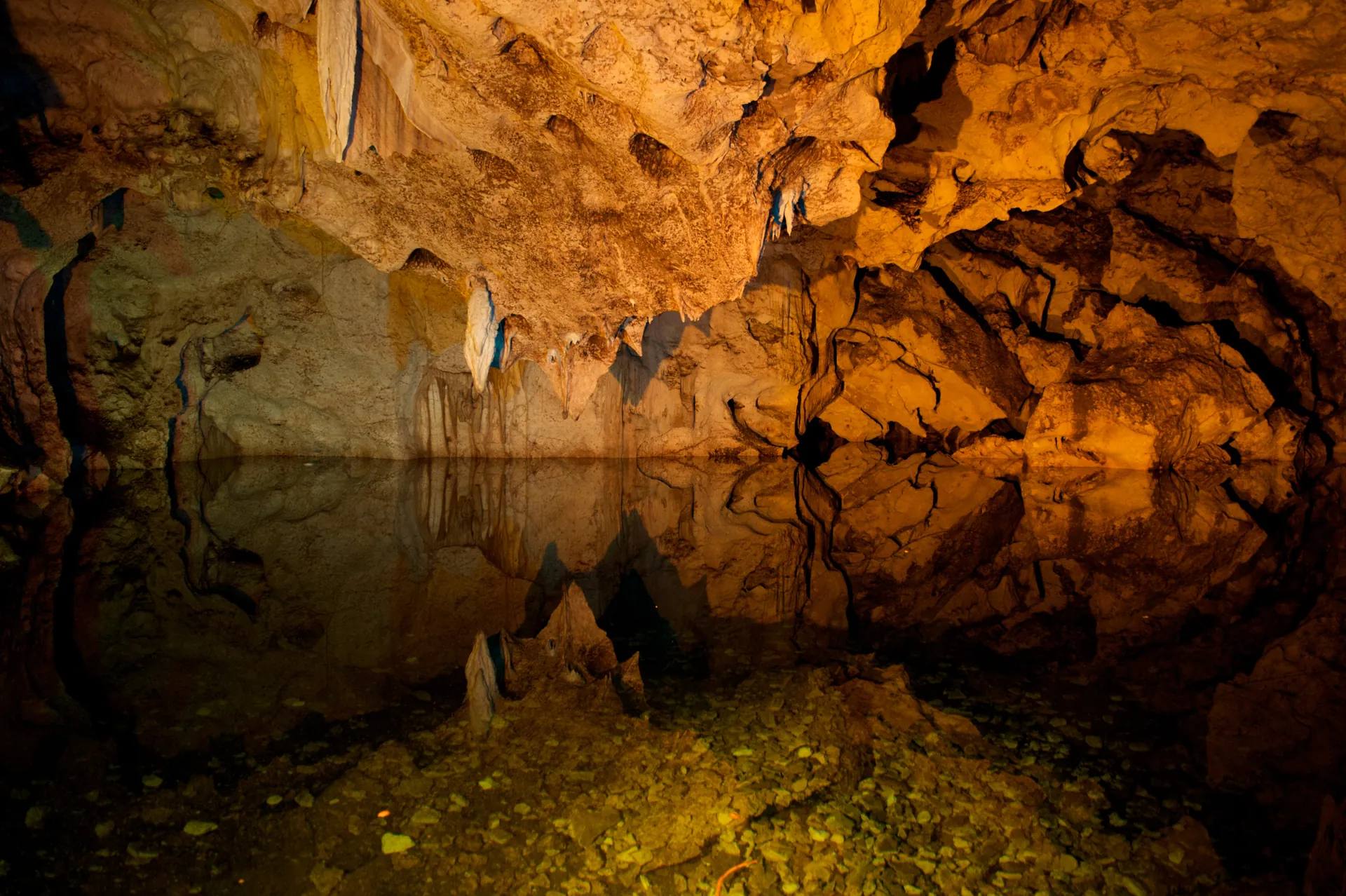
Unlike simple sea caves carved out by crashing surf, the green grotto caves formed through dissolution, where mixing zones of fresh groundwater and saline seawater hollowed out the limestone over millions of years. This created an expansive two-tier cavern system. The upper level contains dry, towering galleries lit by occasional ceiling collapses known as skylights, while the lower level drops roughly twelve metres into near-total darkness, culminating in an underground lake. When you explore the site today, as detailed in our guide to cave highlights and geological features, you walk through the identical chambers where Taíno families collected water during dry months.
A Cave Shaped by People
Taíno and Early Use
The archaeological evidence recovered from the entrance chambers includes red-slipped pottery and flint implements typical of late Taíno settlements in northern Jamaica. While popular tour lore often claims every chamber held ceremonial altars, documented research indicates the caves functioned primarily as temporary domestic shelters and freshwater procurement sites. The humid subterranean air kept water reserves pristine, protected from surface contamination and tropical sun.
The surrounding dry limestone forest yielded hardwood, medicinal plants, and small game like the hutia. For the Taíno, entering these subterranean chambers required torches fashioned from torchwood (Amyris elemifera), illuminating glistening flowstone walls that modern visitors now observe under low-voltage pathway lamps.
Colonial and Later History
When English forces under Admiral William Penn and General Robert Venables captured Jamaica in 1655, the Spanish colonists did not surrender immediately. The last Spanish governor, Cristóbal Arnaldo Ysassi, led a protracted guerrilla resistance from the rugged limestone hills of St. Ann. Historical accounts documented by the Jamaica Information Service and the National Library of Jamaica confirm that Ysassi and his troops used the cavern system to hide rations, plan ambushes, and evade British patrols before teh British soldiers could locate the opening.
Ysassi held out for five years until his final defeat in 1660, when he and his remaining followers escaped to Cuba in dugout canoes launched from the adjacent coastline. That military withdrawal transformed the cave into a strategic hideout, establishing a subterranean maze that British redcoats had no stomach for.
When you stand in the lower chamber with the guide’s torch switched off, you realise the blackness here was not scenery. For centuries, that total absence of light was the only thing standing between a hunted human being and recapture.
Callum Vance
Runaway Caves and the Stories Behind the Name
Following the Spanish evacuation, the northern coastline of St. Ann became heavily planted with sugarcane, worked by hundreds of thousands of enslaved Africans. The proximity of the Queen of Spain Valley and coastal plantations to dense karst terrain made this part of Jamaica an active corridor for self-liberation. Enslaved men and women escaped into the interior limestone hills, using the cavern network as temporary shelter while evading slave-catchers and militias.
This history of resistance gave the site its historic twentieth-century name: Runaway Caves. The subterranean spaces offered natural concealment that dogs could not easily track across broken rock and guano deposits. While historical records do not indicate that a permanent maroon community established its village permanently underground, the chambers served as staging posts for freedom-seekers attempting to reach established maroon settlements in the Cockpit Country or boarding fishing skiffs bound for the open sea.
The names applied to this single geographical feature over the past two centuries reflect its changing human utility. Colonial land deeds refer to the property as Cave Hall Caves or Hopewell Caves, derived from surrounding sugar estates. Later cartographers labelled it Discovery Bay Caves or Dry Harbour Caves, anchoring the site to Columbus’s landfall. Local farming communities referred to sections as Dairy Caves, because the cool external hollows sheltered cattle from midday heat, while the name Rum Caves took hold when commerce replaced conflict.
The Cave Goes to War: Smugglers, Rum, and Wartime Secrets
Between the First and Second World Wars, the northern coastline of Jamaica operated as an active smuggling conduit. Archival records and local tradition describe small schooners anchoring offshore at night, landing shipments of munitions bound for insurgent factions in Cuba. The deep chambers provided dry, hidden storage close to sheltered coves where customs officers rarely ventured. While not every tale of hidden pirate gold withstands academic scrutiny, arms transfers through the cavern passages are corroborated by regional trade surveillance records from the 1930s.
When the Second World War engulfed the Atlantic, the Caribbean became a hunting ground for German U-boats targeting Allied merchant shipping. Commercial exports of Jamaican agricultural products ground to a halt, leaving warehouses in Kingston and Montego Bay vulnerable to bombardment. The British colonial administration requisitioned the cavern mouth, rolling thousands of heavy wooden puncheons of Jamaican rum into the dry upper galleries. Stored away from naval gunfire and tropical heat, the cavern became an impromptu bonded warehouse, securing valuable export revenue until commercial shipping resumed.
In the postwar decades, the property transitioned into private commercial hands. The Kirkner family acquired the land in the 1960s, opening rough pathways and clearing bat guano to accommodate adventurous motorists driving between Montego Bay and Ocho Rios. Recognising the site’s environmental fragility and historical value, the Jamaican government eventually reacquired the property through the Urban Development Corporation (UDC), placing it under the custodial care of the St Ann Development Company to manage it as an official natural heritage sanctuary.
Green Grotto Meets James Bond: Live and Let Die (1973)
In the autumn of 1972, Hollywood came underground. The green grotto caves james bond connection began when producers Albert R. Broccoli and Harry Saltzman selected Jamaica as the primary exterior location for Live and Let Die, Roger Moore’s first screen outing as secret agent 007. Director Guy Hamilton needed a dramatic setting for the underground lair of villain Dr. Kananga (Yaphet Kotto), who ruled the fictional Caribbean island of San Monique while running a heroin syndicate under the alias Mr. Big.
Rather than building expensive sound stages at Pinewood Studios in England, Hamilton brought his film crew to Discovery Bay. The cavern’s vaulted ceilings, natural rock bridges, and subterranean lake provided an authentic, eerie subterranean fortress that artificial plaster sets could never replicate. Film technicians laid heavy cables along the limestone pathways and installed lighting rigs among the stalactites, transforming the quiet karst sanctuary into an international film set.
Cinematic history buffs frequently consult the Jamaica Observer archives to trace the film’s regional footprint. In the movie’s climax, Bond and psychic reader Solitaire (Jane Seymour) are tied together and lowered toward a shark-infested pool via a hydraulic hoist. That pool was Green Grotto’s subterranean lake, fitted with mechanical props and simulated shark fins. Bond eventually frees himself, forces Kananga to swallow a compressed gas pellet, and watches the villain float to the cavern ceiling before exploding. The scene remains one of the most camp and memorable conclusions in the entire Bond franchise, as highlighted across our main guide to Green Grotto Caves.
Cinema borrowed the limestone for a season of villainous spectacle, but the real weight of Green Grotto belongs to the men and women who survived here long before cameras arrived.
Bond on Screen, Jamaica on Location
Live and Let Die on the North Coast
Jamaica was central to the James Bond universe long before the cameras rolled at Green Grotto. Ian Fleming wrote all fourteen Bond novels at his Goldeneye estate in Oracabessa, located less than an hour’s drive east of Discovery Bay. Dr. No (1962) was filmed near Kingston and Ocho Rios, establishing the island as Bond’s spiritual home.
During the 1972 shoot for Live and Let Die, the production utilised multiple northern locations: the crocodile farm at Falmouth, the Rose Hall Great House estate, and the coastline of Runaway Bay. Green Grotto supplied the claustrophobic contrast to those sun-drenched outdoor chases, providing Kananga’s base with genuine menace.
What Remains Today
Visitors frequently ask guides to show them Kananga’s shark tank or the hidden steel elevator. The truth is straightforward: once filming wrapped, the production removed the metal hoists, synthetic cables, and props, returning the cavern to its natural condition. The physical cave outlasted the set dressing.
The green grotto caves history incorporates the Bond legacy as one chapter among many. What remains today is the authentic rock formation: the subterranean lake, the towering limestone arches, and the natural acoustics that captivated film scouts over fifty years ago.
The Cave You Walk Through Today
Modern visits follow well-tended concrete paths, illuminated by low-impact lighting designed to inhibit the growth of invasive algae on the rock faces. As you descend sixty-five steps toward Grotto Lake, the air thickens with humidity and the temperature drops slightly, mimicking an underground cellar. The underground lake rests twelve metres below the surface, its water crystal-clear, calm, and brackish. The water level rises and falls subtly with the Caribbean tide, connected to the open sea through submerged karst conduits.
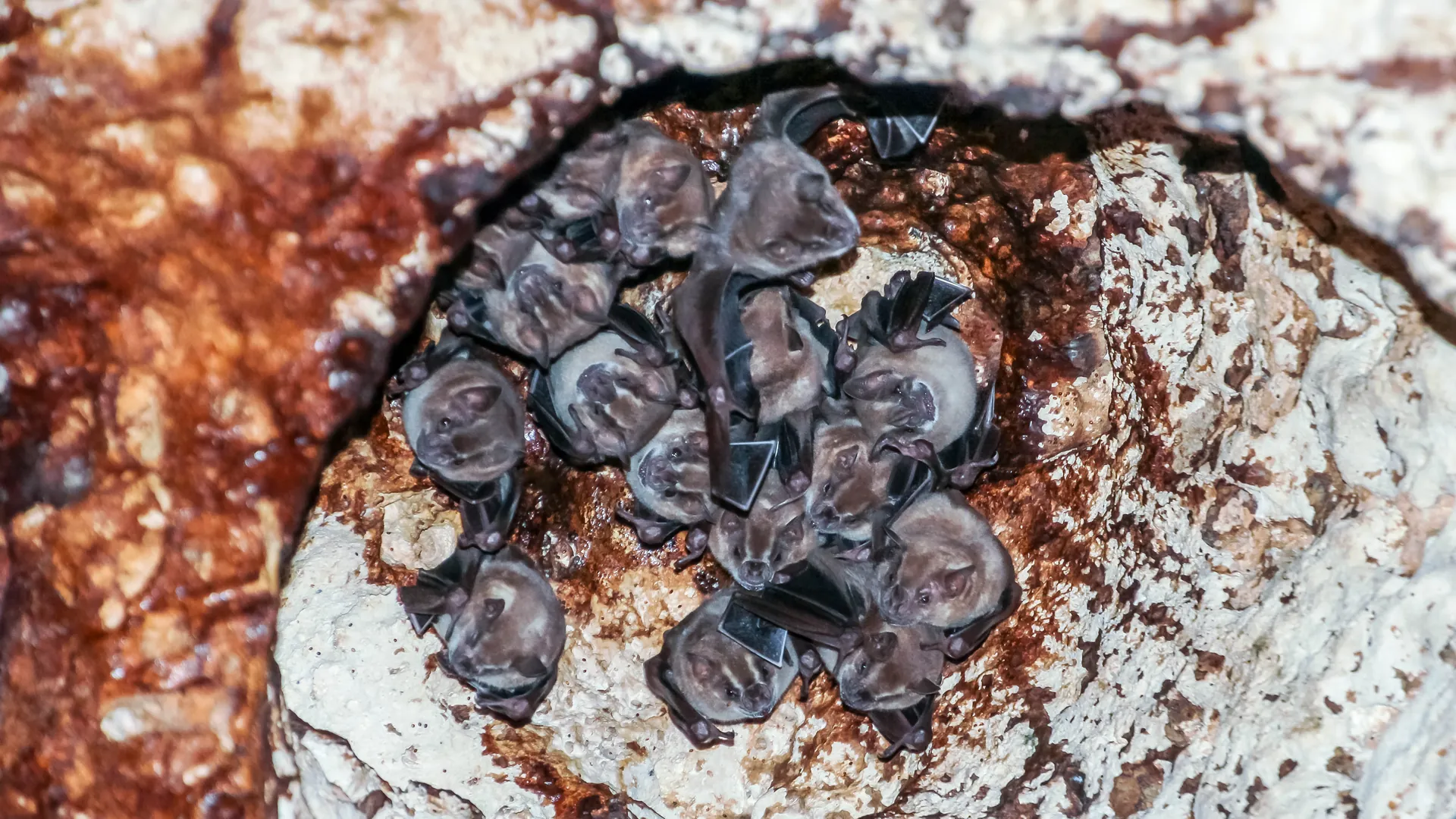
The cave is also a living ecosystem. Nine species of bats roost in the upper hollows, including the Jamaican fruit bat and several insectivorous species that emerge at twilight to forage across the St. Ann canopy. Their guano supports specialised cave-dwelling invertebrates, blind shrimp, and small subterranean fish. Because this environment is fragile, management enforces strict rules regarding touching formations, noise levels, and litter, which you can review in our guide to visitor rules and safety guidelines.
Many independent travellers combine an exploration of Green Grotto with other northern coast sights. Shore excursion operators from Falmouth Port and Montego Bay regularly run half-day packages pairing the caves with nearby waterfall climbs, offering a well-rounded glimpse into the island’s natural diversity. To evaluate how other travellers experienced the walk, take a moment to read our breakdown of visitor reviews and honest tour insights before booking your morning slot.
Historical and Visitor Context
| Historical Period | Connection to Green Grotto Caves | Visible Physical Evidence Today |
|---|---|---|
| Pre-Columbian (Taíno Era) | Indigenous settlement, freshwater gathering, and temporary storm refuge | Ceramic sherds and stone tools preserved in archaeological archives |
| Spanish Colonial (1655–1660) | Guerrilla headquarters for Governor Ysassi during the British invasion | Concealed natural entry points and defensive rock alcoves |
| Era of Enslavement (18th–19th Century) | Concealment corridor for escaped enslaved people seeking freedom | Upper cavern chambers known historically as Runaway Caves |
| Interwar Period (1920s–1930s) | Covert munitions caching for arms runners smuggling cargo to Cuba | Dry inner galleries and secluded subterranean storage rooms |
| World War II (1940s) | Requisitioned by the British administration as a bonded rum warehouse | Historic entrance ramps once used to roll large oak puncheons |
| Cinematic Era (1972–1973) | Filming location for villain Kananga’s lair in Live and Let Die | Subterranean Grotto Lake where the shark pool scenes were filmed |
| Modern Era (Present Day) | Public eco-tourism and heritage reserve managed by the UDC | Paved walking paths, safety railings, and interpretive signage |
Official Heritage Records & Archival Sources
The narrative surrounding Green Grotto Caves rests on documented parish histories, national library archives, and conservation assessments. To review original source material or read deeper historical accounts, consult the following public institutions:
- National Library of Jamaica: Historical collections detailing St. Ann parish land transfers and the 1655–1660 Spanish resistance under Cristóbal Arnaldo Ysassi.
- Jamaica Information Service (JIS): Parish profiles documenting early Taíno archaeological sites along the northern karst shelf.
- Urban Development Corporation (UDC): Ecological monitoring reports and management plans for the Green Grotto Caves attraction and dry limestone forest reserve.
- Jamaica Observer Historical Features: Retrospective coverage detailing the 1972 production logistics of Roger Moore’s debut in Live and Let Die.
How to Read the Cave’s History Respectfully
Standing inside the limestone galleries, it is easy to let the Hollywood film lore overshadow the much harder human realities etched into the stone. Roger Moore spent roughly two weeks on location here; the people seeking refuge from enslavement spent weeks and months enduring complete darkness, damp rock, and constant peril. When guides switch on the lights along the path, take a moment to look beyond the Bond trivia.
The best way to experience Green Grotto is to listen carefully to the generational stories shared by local Jamaican guides, who know the acoustic sweet spots of the rock and can point out natural formations that resemble native fauna. Keep your voices lowered, avoid touching the damp flowstones, and respect the living bat population that relies on this darkness for survival. The cave is an enduring record of Jamaican resilience, waiting quietly beneath the road.
Experience the James Bond Subterranean Lake in Person
Descend 65 steps into the cavern where 007’s iconic underground lair scene was filmed. Certified guides lead small groups daily.
Explore Cave Tours & Rates →